article
My TI:GER Experience
5 min read
Dec 16, 2025
From graduation ceremony
This isn't an endorsement of the program. This is my experience.
The Setup
For the uninformed, TI:GER stands for Technology Innovation: Generating Economic Results. This was a huge factor in why I decided to go to Georgia Tech for my MBA. At the time of my application, students were paired with real start-up companies so that they could solve real business problems as part of their course of study.
Well, fast-forward to my first TI:GER class and I find out that due to no fault of the faculty and staff of the TI:GER program, things have changed, meaning that they were no longer pairing us with “real-live” businesses. Instead, we'd be building a greenfield project and working from a textbook called Disciplined Entrepreneurship.
MBA school is all about group work and you learn early who your style complements. I reached out to a guy that I had worked with before and we teamed up to interview our other group members. This was great, we had four to five people “interview” with us and we picked two. Throughout the semester we would get to know one another and build a business from an idea.

My group from left-right: Aman Jonathan Prakash, Me, Jimmy Strom, Rakim Hirji
How TI:GER Defines Innovation
In the first week of TI:GER you get the definition of innovation. If you asked around, hey what's innovation? You might hear, “something new”, “something fresh”, “something the world has never seen (repeat)”.
But in TI:GER, we live by a different code. Innovation is simple: “invention x commercialization.” Therefore, without one or the other, there is no innovation. This causes the innovator to think about the invention and know the business.
Side note, you always want to say “yes, AND...” it helps to foster a more inclusive atmosphere. My MBA Jackets know this.
Our focus is IDE—Innovation-Driven Enterprise—and all this time as a software engineer, I thought it only meant integrated development environment—IYKYK. Our focus is big markets. Our small businesses need to capture large market share. Simply put, we need to scale.
Some of this stuff is 1:1 with an engineering mindset. However, over the last two semesters I had to call on all of my previously learned skills whether from practice in my day job or from a course in my MBA program and learn new ones in order to innovate. Those skills include but are not limited to finance, strategy, marketing, and accounting.
A new skill for me was customer discovery. It was great to talk to people again. Being a senior MLOps Engineer, I definitely got to talk to people but to speak to a customer other than another engineer was one of the best parts about my journey.
We put together a real product and had real data to help us do so. There was one particular book that I recommended to my group that helped us all. If you are interested in the name of it, contact me directly and I'll share it with you. Contact me here.
Customer discovery is an art. You need to be able to read the room, hear what is being said, and listen for what they're not saying. The hardest part is getting people to schedule a call, but I literally can do these all day long and not get bored.
As an engineer, we'll often make things that we think are useful but when “the thing” is put on the open market we find that it isn't getting the use that we had intended. The main reason for that is because we don't have one or two things, commercialization or invention, or even worse neither of the two! TI:GER gave me the tools to think through the process of creating new products.
Where This Breaks Down in Practice
The best example that I have is from a company that I am familiar with. This company's main business was selling content. They had two economic buyers, 1) corporate enterprises (B2B) and 2) other individuals (B2C). Their B2B customers made up about 60-65% of their revenue.
This company wanted to employ AI in their platform during the beginning of the AI Boom. So who did they make their AI product for? And how did they employ the AI?
Well, the answer to the first question may seem obvious, but they chose to make their AI product for the 35-40% of their revenue base. For revenue-protection and/or growth—bad decision. The answer to the second question was they built an AI chatbot.
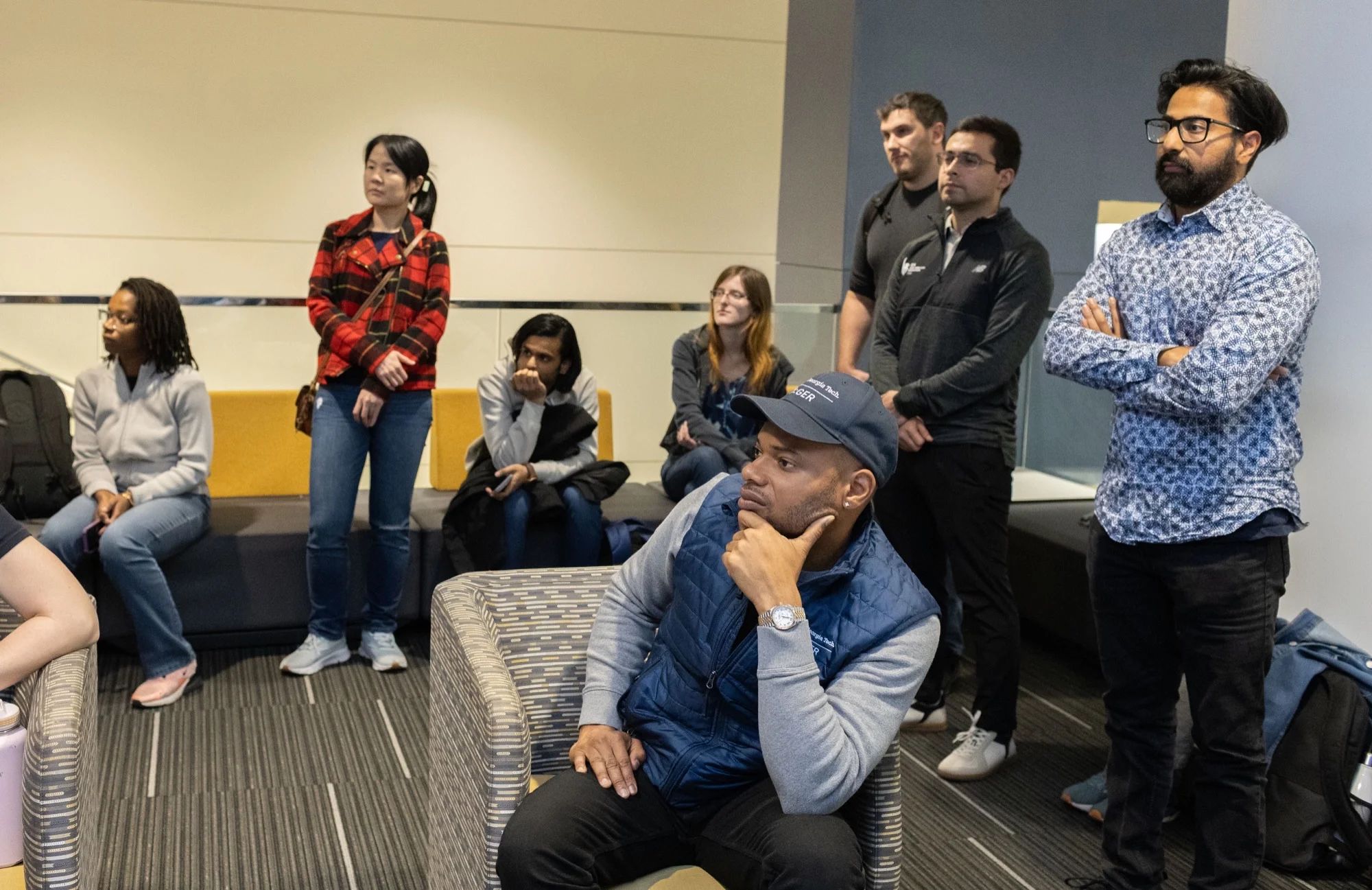
Listening intently
Without blaming any one person you may see where things like economics, product knowledge, technical expertise, market knowledge, finance, basic accounting, and plain old common sense come into play.
This is where TI:GER shines. It is an exercise of the aforementioned domains/skills. Furthermore, TI:GER is where you get to employ good decision making using all of the previously mentioned skills.
In the face of economic headwinds and as a result of the decision to spend millions of dollars and thousands of man hours in the development of their AI project, the company RIF'd most of their AI team (those that built and maintained) their chatbot, leaving enough people to “keep the lights on”, in an effort to improve their bottom line.
My Takeaways
Lesson here, take care of your main revenue stream, think holistically, and build products that support and promote the value that made your primary market choose you over other vendors in the first place. Chasing fads will most certainly have you chasing the next as soon as the current one dies. Meanwhile, you have lost time and the opportunity to create real value that can grow your business, your competitors outpace you, and you struggle to make shareholders happy.
Here's an idea, instead of chasing the latest AI fad, think big picture, look at what will help you to deliver faster, more efficiently to your primary market.
In that company's case, an AI tool that helped to deliver content faster would have been the proper use of its resources. Why? Because 100% of their revenue comes from the content that they create and up to 65% of their revenue came from their enterprise customers who only consume the content. That's to say they will never interact with their AI chatbot.
I shared some ideas with insiders but unfortunately that came after the company had millions of dollars in sunk costs in their fledgling AI chatbot.
Suffice it to say, I think the company made the right choice in their RIF and I would have done the same given the circumstances. When you notice that you have an expense that does not drive revenue nor supports the viability or value of your core—cut it!
TI:GER taught me how to gather the necessary data, analyze that data, see the signals, and develop a plan of action based on all findings; therefore, avoid that situation entirely.
I still have to make small-regular deposits into my bank of experience, education, and training. Yet unlike many others in management and leadership roles, my tool belt prepares me for multi-faceted, multi-modal approaches to solving problems regarding business, people, and technology.
I don't think the TI:GER concentration is the end-all-be-all when it comes to MBA programs or concentrations. There are many great business schools out here that do not have an official TI:GER concentration. However, I am a better manager, leader, and person because of the work I completed in Georgia Tech's TI:GER program.
Thank you TI:GER!
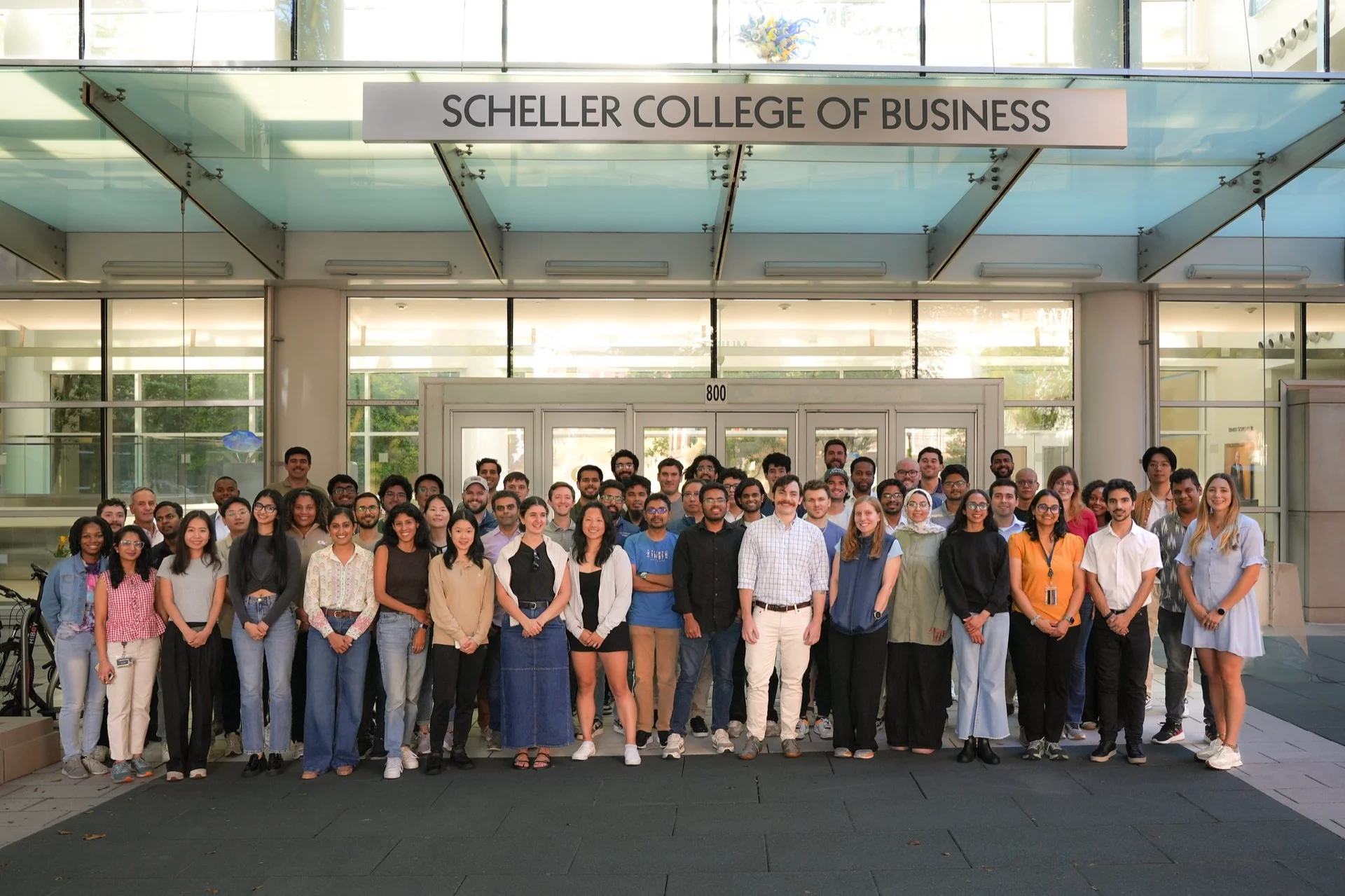
Class photo